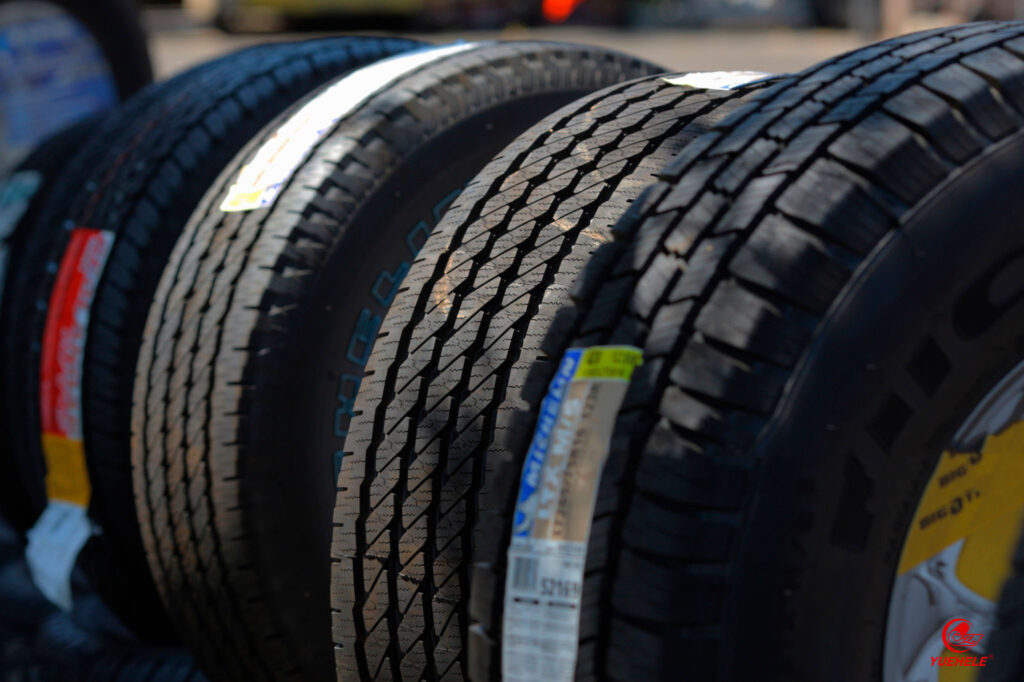
In the automotive and tire manufacturing industries, label materials must withstand extreme operational conditions while maintaining functionality. Linear Paper has emerged as a breakthrough solution for tire labels, combining high-temperature resistance, tensile strength, and curved surface adaptability. This advanced material addresses critical challenges in tire labeling, from production to end-use, offering a reliable and efficient alternative to traditional substrates like synthetic films or standard paper.
1. Material Characteristics: Engineered for Durability
Linear Paper is a composite material designed with precision to meet the mechanical demands of tire applications. Its key structural features include:
- Reinforced Fiber Matrix: Long cellulose fibers aligned in a unidirectional orientation enhance tensile strength, enabling the material to resist stretching and tearing during tire vulcanization, handling, and high-speed rotation.
- Polymer Coating: A specialized resin coating provides moisture resistance and surface smoothness, ensuring printability for barcodes, safety warnings, and regulatory information.
- Lightweight Flexibility: With a thickness of 80–120 microns, Linear Paper maintains flexibility without compromising durability, allowing it to conform seamlessly to curved tire surfaces.
These properties make it ideal for dynamic environments where labels face constant stress, abrasion, and deformation.

2. High-Temperature Resistance: Stability Under Extreme Heat
Tire labels encounter intense thermal cycles, from the 150–180°C vulcanization process to prolonged exposure to road-generated heat. Linear Paper excels in these conditions due to:
- Thermally Stable Additives: Inorganic fillers (e.g., silica nanoparticles) and heat-resistant polymers prevent degradation, delamination, or discoloration even at sustained temperatures up to 200°C.
- Low Thermal Expansion: The material’s coefficient of thermal expansion (CTE) is engineered to match rubber substrates, minimizing warping or adhesive failure during temperature fluctuations.
- Compliance with Standards: Linear Paper meets ISO 6337 and SAE J2975 specifications for automotive labeling, ensuring reliability in global markets.
Testing shows that labels retain >90% adhesion strength and legibility after 1,000 hours of thermal aging, outperforming conventional polyester films.

3. Application Advantages: Precision and Efficiency
a) Curved Surface Compatibility
Tire sidewalls have complex geometries, demanding materials that can adhere smoothly without wrinkling or edge lifting. Linear Paper achieves this through:
- Controlled Elasticity: Its balanced stiffness-to-flexibility ratio allows it to wrap tightly around curved surfaces, even at radii as small as 5 cm.
- High-Tack Adhesives: Compatible with pressure-sensitive adhesives (PSAs) that maintain bond strength across temperatures from -40°C to 150°C, critical for winter tires or desert climates.
b) Clean Tear Feature
Linear Paper incorporates laser-perforated tear lines, enabling operators to remove labels quickly and cleanly during retreading or recycling. This reduces residue and improves workflow efficiency in factories and service centers.
c) Sustainability Edge
As industries prioritize eco-friendly materials, Linear Paper offers a recyclable and halogen-free alternative to PVC-based labels. Some variants integrate biodegradable coatings, aligning with circular economy goals.
Unlock high-performance material innovation! Linear Paper delivers unmatched high-temperature resistance (up to 200°C), tensile strength, and multi-scenario adaptability—perfect for tire labeling, aerospace, and green energy applications.